
These are the real-world lessons we’ve picked up along the way — the things that only become obvious once you’re already on the journey or in hindsight.
#1. Don’t forget your credit card
If you don’t normally use a credit card, it’s worth applying for one before travelling and taking it with you.
We had been warned by friends not to forget ours… and of course, we did because we’ve never owned a credit card.
This turned out to be a major issue when trying to collect a pre-booked and fully paid hire car overseas. Even though the booking was confirmed, the rental company would not release the vehicle without a credit card — a debit card was not accepted.
This caused unnecessary stress and wasted time. Eventually, another car company in the same building came to our rescue, but it was a very stressful start to that section of our trip.
#2. Check car rental pickup locations carefully
Some car hire companies including those at airports, operate from off-site depots. Double-check the exact pickup location before booking — especially if you won’t have your own transport to get there.
We booked a car from (we thought) the Gold Coast airport only to find when we arrived that pick up was not at the actual airport.
Fortunately, our son had driven us so it wasn’t a problem, however if we had used a taxi or uber this might have been a real issue at the beginning of the first leg of our trip.
#3. Respect the scale of Australia
Driving from the Gold Coast to Fremantle is an immense undertaking — around 4,295 kilometres, crossing the vast Nullarbor Plain, the world’s largest limestone karst landscape.
It’s a remote and demanding route, with long distances between fuel stops, limited mobile phone and internet coverage, extreme temperatures, and challenging road conditions in isolated areas. Fatigue is a real risk on a journey of this scale.
After considering these factors, we made the decision to drive only (approximately 2300 km) as far as Adelaide in South Australia, where we then joined the iconic Indian Pacific train to continue the journey to Fremantle.
What we learned was simple: in Australia, distance is not just a number on a map — it’s something you need to plan for realistically, not romantically.

#4. A waterproof coat with a hood is worth every cent
If travelling through cold and especially wet climates, choose a fully waterproof coat with a hood rather than one that is only showerproof. A longer coat that covers your legs is also much more comfortable in wind, rain, and sleet.
One unexpected feature we came to appreciate was a jacket that zipped from both the top and bottom, making it far more comfortable when sitting.
We also learned that lightweight coats which compress down into a smaller size are much easier to pack for extended travel.

#5. Don’t be afraid to ask for expert help when planning and/or booking
One of the biggest lessons for us was learning that independent travel and expert assistance can work very well together.
We discovered that planning a complex multi-country trip ourselves didn’t mean we had to do everything alone. Having someone experienced help with selected bookings and difficult logistics saved time, reduced stress, and sometimes even found better options than we could have found ourselves.
#6. The ordinary photos become important too
One thing we wish we’d done from the beginning was spend a few minutes each evening sorting photos into simple folders or giving key images short descriptive titles or adding a location in it’s information. It would make finding specific moments later far easier when writing blogs or creating posts. And I’ve only just found out how easy it is to do; right click on the image to see ‘info’.
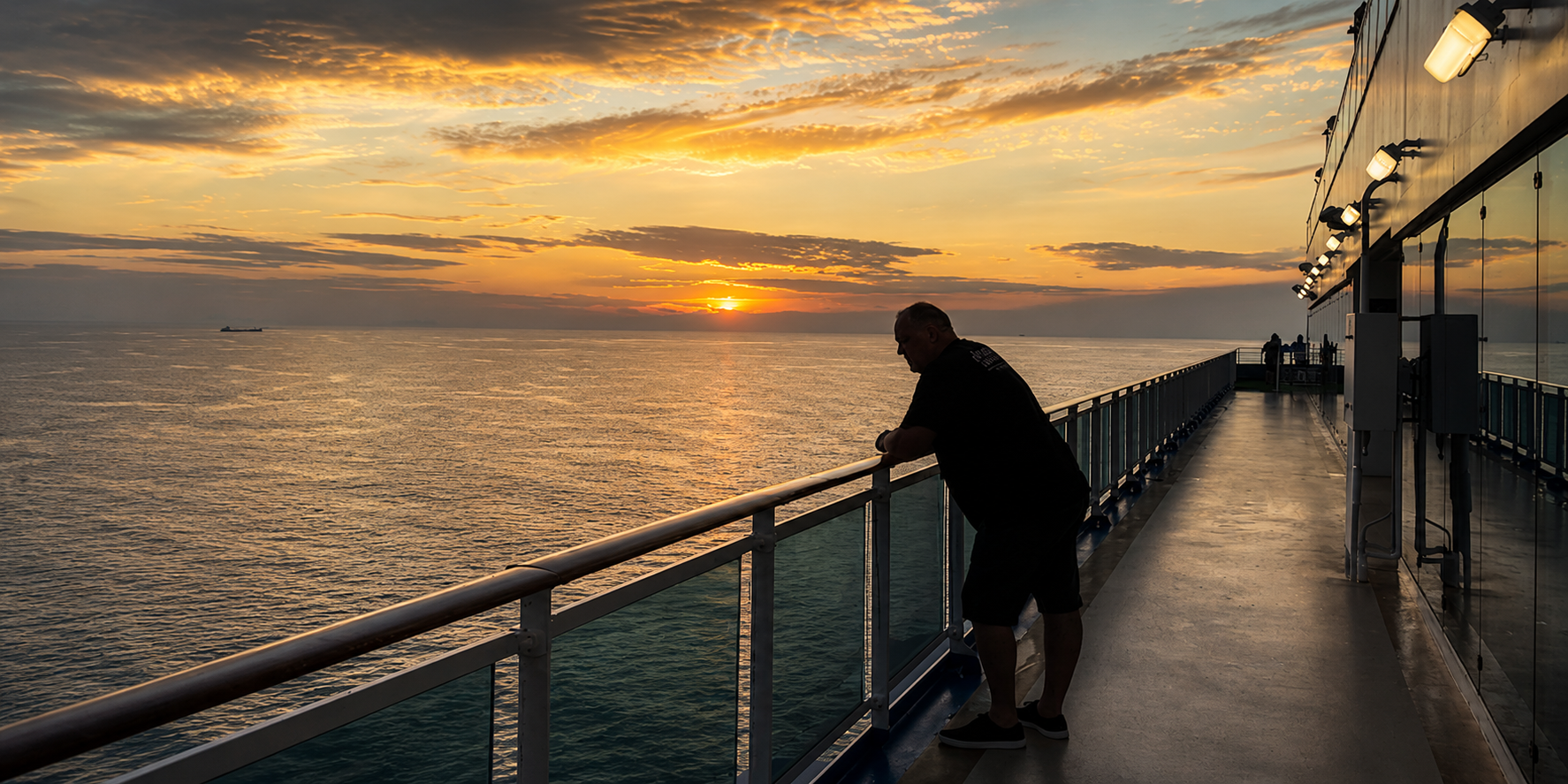
We’re also learning that the “ordinary” photos often become just as meaningful as the scenic ones — cabin corners, ferry terminals, train windows, coffee stops and quiet evenings onboard.
Those are often the images that best capture what the journey actually felt like.
And perhaps most importantly: clean your camera lens regularly. Sea air, fingerprints and humidity are remarkably effective at ruining otherwise perfect travel photos.


#7. Don’t leave shore excursions too late
We learned on our first cruise to book shore excursions early. Many of the most popular tours were already sold out by the time we started looking, as experienced cruisers often reserve them before boarding or soon after arriving on the ship.
If your budget allows, we recommend booking through the cruise line. While independent tours can sometimes be cheaper, ship-sponsored excursions provide peace of mind. If delays occur, the cruise line knows where you are and is far more likely to wait for its own tour groups before departing.